

The Mathematical Foundations of Casino Games
The games found in casinos are meticulously designed with mathematical principles that ensure the house always has an advantage. This advantage is often realized through a concept known as the «house edge,» which is calculated as a percentage of each wager that the casino retains over time. For example, in games like roulette, the layout includes a zero or double zero, which allows the casino to win more often than players. Additionally, many players are now exploring online casino options, which also employ similar mathematical strategies that ensure profitability for the house. This foundational math means that, over time, the odds are consistently stacked in favor of the establishment, making it difficult for individual players to secure long-term profits.
Moreover, each game is governed by specific rules, probabilities, and payout structures that reinforce this mathematical framework. In blackjack, for instance, although players can use strategies to improve their odds, the presence of the dealer’s advantage and the fixed nature of payouts ensure that the casino remains the long-term winner. Understanding these mathematical nuances provides insight into why players often leave without the winnings they hoped for, regardless of their gaming experience.
Beyond the surface-level odds, advanced probability theory plays a vital role in how casinos operate. Analyzing outcomes and the likelihood of certain results allows casinos to fine-tune their games, making them both appealing and profitable. The combination of psychological factors, such as player risk perception, intertwined with these mathematical calculations, creates a perfect storm that keeps patrons engaged while ensuring the house edge remains intact.
The Role of Probability in Casino Games
Probability is the cornerstone of any casino game’s design, influencing not only the outcomes but also the strategies that players adopt. Each game is predicated on specific probabilities that determine how likely certain events are to occur. For instance, in a standard deck of 52 cards, the odds of drawing an Ace is 1 in 13, which affects betting decisions in card games like poker. Hence, understanding these probabilities can elevate a player’s strategy but rarely alters the inherent advantage of the casino.
Additionally, the fixed probabilities ensure that no matter how much players strategize or rely on luck, the house edge persists. This isn’t merely a coincidence; it’s an integral part of how these games are structured. Casinos invest heavily in data analysis to fine-tune these probabilities, often adjusting them as needed to maximize profitability. The result is a symbiotic relationship between the luck of the players and the probabilities engineered to work against them.

Ultimately, awareness of probabilities can impact the player’s experience, but it rarely translates into consistent success. Many players may feel empowered by their understanding of the odds, yet they often overlook the fact that the underlying mathematics favor the casino. This disconnect is what keeps the doors of casinos open, attracting new and returning players alike, as they chase the elusive dream of beating the odds.
The Psychology of Gambling and Its Impact on Players
The psychology behind gambling is a multifaceted phenomenon, intricately linked to the math of casino games. Players often engage in gambling activities driven by various emotions, such as excitement and the thrill of risk-taking. This psychological aspect influences decision-making, often leading players to underestimate the mathematical realities of the games they are playing. For many, the allure of potentially winning large amounts of money can overshadow the inherent risks, resulting in a gambling experience that prioritizes immediate thrill over long-term strategy.
Moreover, casinos utilize specific design elements to enhance the psychological experience, from lighting and sound to the arrangement of games. These factors create an environment that encourages longer play, often blurring the line between rational decision-making and emotional impulse. The well-researched layout of a casino is designed to guide players through a sensory journey that keeps them engaged and, importantly, spending money, irrespective of the odds stacked against them.
In addition to the emotional highs and lows of gambling, cognitive biases also play a significant role. For instance, the «gambler’s fallacy» leads players to believe that past outcomes will influence future results, which is fundamentally flawed in a game governed by probabilities. Understanding these psychological aspects can help players make more informed decisions, but the powerful combination of math and psychology keeps them coming back, often despite an awareness of the odds. This complex interplay is vital in maintaining the casino’s edge.
The Influence of Game Design on Player Experience
Game design in casinos is an art form that thrives on the principles of mathematics and human psychology. Each game is crafted with specific rules, outcomes, and reward structures that entice players while maintaining the house edge. For instance, slot machines are designed with intricate algorithms that determine when payouts occur, ensuring that the casino remains profitable while still providing players with a sense of excitement and unpredictability. The flashing lights and sounds amplify the experience, making even small wins feel significant.
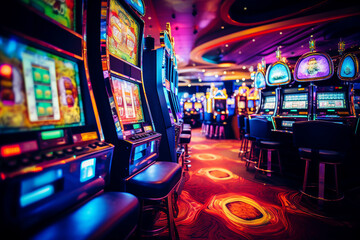
Furthermore, the concept of «near misses» plays a pivotal role in game design. When a player nearly wins—say, by getting two out of three required symbols on a slot machine—it triggers a psychological reaction that compels them to keep playing. This phenomenon is rooted in cognitive biases and can lead players to overspend as they chase the elusive full win, often disregarding the embedded mathematical probabilities that work against them.
Game mechanics are continually tested and optimized by casino operators who analyze player behavior and preferences. By observing how players interact with games, casinos can adapt their offerings to maximize engagement and profits. Thus, the design of casino games is not only a reflection of math and probability but also a carefully calibrated strategy aimed at sustaining player interest while ensuring that the house always has the final say.
The Conclusion: Understanding the Casino Landscape
In conclusion, unraveling the math behind casinos reveals a world where probability, psychology, and game design intertwine to create an environment that is both entertaining and financially advantageous for the house. Players are often entranced by the excitement of potential winnings, yet this enthusiasm is often tempered by the underlying mathematical realities that govern each game. Armed with a better understanding of these dynamics, players can approach gambling with realistic expectations and strategy.
While the thrill of the game is an undeniable draw, recognizing the limits of luck in the presence of a calculated house edge can change how individuals engage with casinos. Knowledge of the probabilities and psychological intricacies involved can enhance the gambling experience, allowing players to enjoy the entertainment aspect while minimizing financial loss. Ultimately, informed players can navigate the casino landscape more wisely and enjoy the thrill without falling victim to its potential pitfalls.
As an ever-evolving domain, casinos continue to captivate and challenge players worldwide. By appreciating the nuances of game mechanics, probability, and psychological influences, players can enhance their enjoyment and fulfillment while understanding the factors that lead to the establishment’s enduring success. This comprehensive perspective not only enriches the player experience but also fosters a healthier relationship with games of chance.